
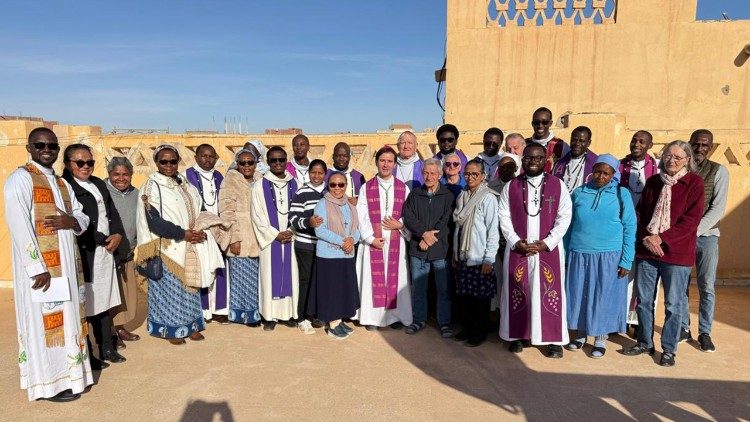
 Algerian faithfuls
This post is an extract from Vatican news Link to the article
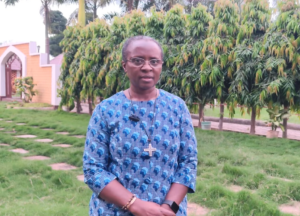
Pope Leo XIV made an Apostolic visit to Algeria on Monday April 13th. In the following interview, Fr. Vincent Kyererezi, a member of the Missionaries of Africa and Vicar General of the diocese of Laghouat-Ghardaïa, explains the importance of the visit and the role of the Church in the predominantly Muslim Algerian society.
- How big is the catholic community in Algeria and in the diocese of Laghouat-Ghardaïa where you serve?
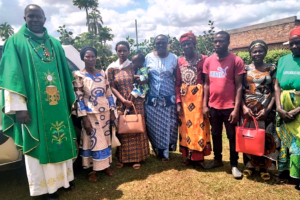
The Catholic community in Algeria is estimated at 8900 faithfuls. The diocese of Laghoaut-Ghardaïa where I serve as Vicar General has about 2,240 Christians, served by 14 priests, including the bishop, 19 nuns, and 5 religious brothers. We generally serve in a “Church of encounter and dialogue with Muslims” that endeavors to foster fraternity, mutual understanding and harmonious co-existence with one another.
The Catholic Church has four dioceses: Oran, Constantine, Laghouat-Ghardaïa and Algiers.
- What are the major apostolic activities in which the diocese of Laghouat-Ghardaïa and the Church in Algeria in general are engaged?
Ours is a Church centred on the Kingdom of God.
Seek first the kingdom of God and His righteousness, and all these things will be added to you” (Matthew 6:33)
Seeking the kingdom of God first through encounter and dialogue with our Muslim brothers and sisters among whom we live, is our major apostolic activity.
The diocese of Laghouat-Ghardaïa is under the care of the congregation of Missionaries of Africa, formerly known as the White Fathers, and the Missionary Sisters of Our Lady of Africa, MSOLA, since its inception in 1868 as an Apostolic Prefecture. In fact, our very own founder, Cardinal Charles Lavigerie, was the first Apostolic delegate. As per his charism, which we still follow up to today, the apostolic presence among local populations, especially Muslims, was his priority. That original vision remains vital and is still a priority in our pastoral endeavours. Our vocation as a congregation and henceforth as a diocese is deeply rooted in the encounter and dialogue with Muslims while humbly serving the entire humanity amidst us. Other religious congregations have since joined in the mission, and some were even founded here, such as the Little Sisters and the Little brothers of Jesus. This shows how the Church in this land has not only received missionaries, but has also given birth to new forms of consecrated life.
- Pope Leo will be meeting the faithful in only two cities of Algeria, and these are: Algiers, the capital, and Annaba. Why exactly these cities and not others?
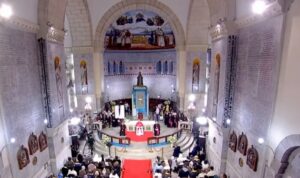
Firstly, Algiers, the capital city, is where the president of the Republic resides. He is the one who invited the Pope and has to welcome him as well. The second reason for visiting Algiers is because of the historical importance of the Basilica of Our Lady of Africa. The pope will meet the Christian community with the Algerian Muslim friends in the basilica where a visible inscription on the main fresco behind the Altar reads, “Our Lady of Africa, pray for us and for the Muslims”, exhibiting an interfaith message of tolerance and mutual co-existence this place holds in the heart of Algeria. It’s also here, that the Missionaries of Africa made their first vows, set off to Africa on 15th November 1878, arriving in Uganda on 17th February 1879. They had been founded in Algiers by Cardinal Charles Lavigerie and were sent to East Africa following a formal request by Pope Leo XIII. In that manner Algiers became the gateway to the rest of Africa; no wonder, therefore, Pope Leo XIV has chosen to start his apostolic pilgrimage to Africa here.
Secondly, the visit to the city of Annaba is most likely related to Pope Leo himself belonging to the Augustinian order. He was present in the Basilica of St. Augustine in 2013 at its inauguration after renovation, when he was the Prior General of the Augustinian Order. The Augustinians are still present here, and is scheduled to meet them during the visit. Annaba city is where Saint Augustine lived and served as bishop and wrote many of his scholarly works (396-430 A.D).